Kazakhstan and Soka Gakkai Develop Their Cooperation — World Points
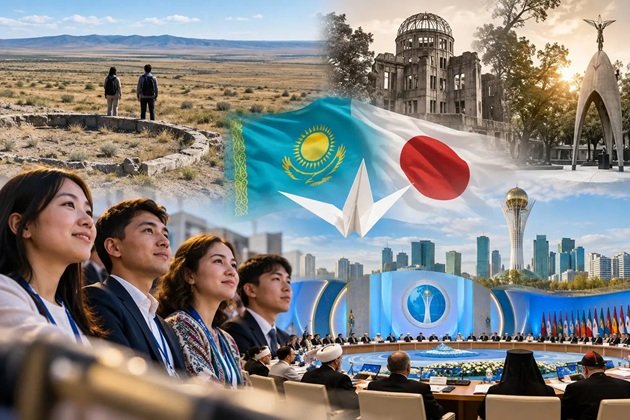
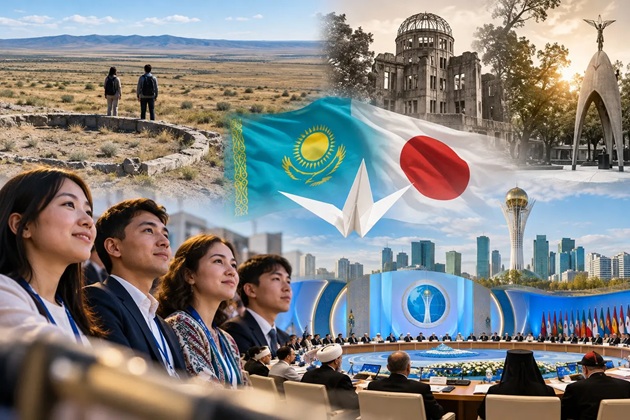
ASTANA / TOKYO, November 5 (IPS) – The atomic bombings of Hiroshima and Nagasaki and a long time of nuclear testing at Semipalatinsk left Japan and Kazakhstan with totally different histories of nuclear struggling. These experiences have helped maintain a partnership that’s now discovering new avenues by way of interfaith dialogue.
Soka Gakkai Worldwide, or SGI, has labored with Kazakhstan’s International Ministry, its United Nations mission and civil society organizations to elucidate the humanitarian penalties of nuclear weapons and produce governments and activists collectively to debate disarmament.
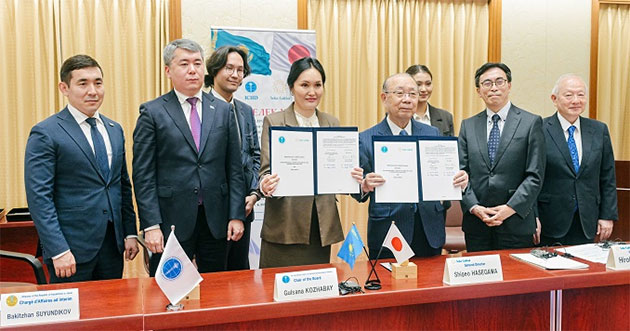
The Congress of Leaders of World and Conventional Religions is offering one other setting by which that cooperation can develop. On June 30, Soka Gakkai and Kazakhstan’s Worldwide Heart for Interfaith and Interreligious Dialogue, often known as ICIID, signed a memorandum of understanding in Tokyo. They’re now discussing sensible initiatives, together with preserving the reminiscence of nuclear struggling and educating younger individuals about peace.
“The precedence is to not create one other programme on paper, however to establish two or three areas the place we are able to do one thing collectively and show actual outcomes,” Gulsana Kozhabay, the middle’s board chair, mentioned in written responses to INPS Japan.
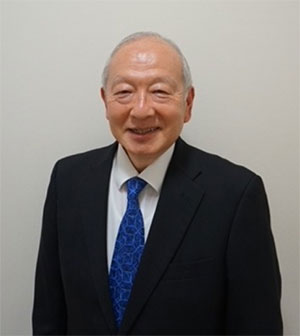
Yoshiyuki Nagaoka, govt director of Soka Gakkai’s Workplace of Public Affairs, who represented the group eventually 12 months’s eighth congress, mentioned in a separate written interview that the memorandum had introduced their cooperation into “a brand new stage.”
Their responses level to an effort to construct on present disarmament partnerships by bringing survivors’ testimony and peace training extra absolutely into the interfaith discussion board’s work.
A Partnership Rooted in Nuclear Expertise
For Kazakhstan, disarmament is inseparable from nationwide historical past.
The Soviet Union performed 456 nuclear checks at Semipalatinsk between 1949 and 1989. Kazakhstan closed the positioning in August 1991, shortly earlier than independence, and subsequently relinquished the nuclear weapons left on its territory after the Soviet collapse.
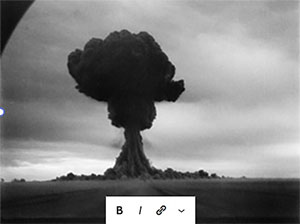
The circumstances of the atomic bombings in Japan and the nuclear checks in Kazakhstan have been totally different, as have been the patterns of hurt. However the two nations share a duty to convey the enduring penalties for well being, communities and the surroundings — and to forestall others from struggling them.
Kozhabay mentioned the humanitarian dimension was notably essential at a time when nuclear weapons have been more and more mentioned when it comes to deterrence and strategic stability.
“These histories give each our nations a selected duty to maintain the human penalties of nuclear weapons seen,” she wrote.
Soka Gakkai representatives started collaborating within the Congress at Kazakhstan’s invitation in 2018. The next 12 months, an SGI delegation visited Semey and the previous Semipalatinsk nuclear check web site.
Soka Gakkai emphasised the importance of its delegation having witnessed the realities of the positioning firsthand and mentioned it hoped to discover alternatives for extra individuals to go to and deepen their dedication to peace and nuclear abolition.
These exchanges have additionally helped produce a tangible file of struggling: I Need to Reside On: The Untold Tales of the Polygon, a documentary made by way of cooperation between SGI and Kazakhstan’s nongovernmental Heart for Worldwide Safety and Coverage, or CISP.
SGI described the movie as a venture developed with an NGO by way of exchanges courting again to 2018. It brings the experiences of individuals affected by nuclear testing into the talk over nuclear weapons.
Constructing on Diplomatic Cooperation
SGI’s partnership with Kazakhstan has additionally developed in settings the place governments and civil society meet.
SGI and Kazakhstan’s U.N. mission have co-hosted facet occasions at Conferences of States Events to the Treaty on the Prohibition of Nuclear Weapons and through Preparatory Committee classes for Nuclear Non-Proliferation Treaty Evaluation Conferences. These gatherings, he mentioned, have introduced collectively authorities officers and civil society representatives to assist construct worldwide assist for nuclear abolition.
In 2023, SGI labored with Kazakhstan’s International Ministry, the Worldwide Committee of the Pink Cross, the Worldwide Marketing campaign to Abolish Nuclear Weapons, CISP and different companions to assist a regional convention on the humanitarian penalties of nuclear weapons and the Central Asian nuclear-weapon-free zone. Representatives of all 5 Central Asian states participated.
In March 2025, Kazakhstan’s U.N. mission, CISP and SGI co-hosted a screening of the documentary on the United Nations alongside a nuclear-ban treaty assembly, connecting communities’ experiences with worldwide coverage discussions.
“What issues, I consider, is that these efforts proceed, slightly than stay one-off initiatives,” Nagaoka mentioned.
He expressed a willpower to deepen exchanges with Kazakhstan and construct additional examples of cooperation between civil society and intergovernmental diplomacy.
The memorandum with ICIID doesn’t exchange these relationships with the International Ministry, the U.N. mission or nongovernmental organizations. Slightly, the interviews recommend an effort to attract on their gathered expertise for brand new academic and trade packages inside an interfaith framework.
From Non secular Dialogue to Peace Training
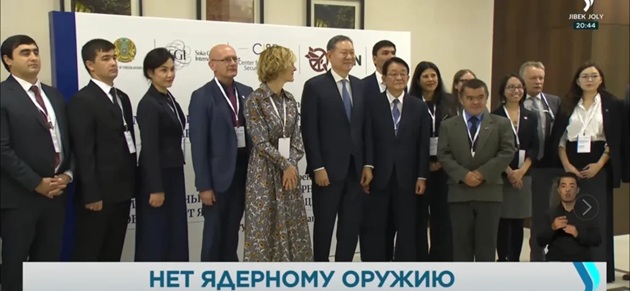
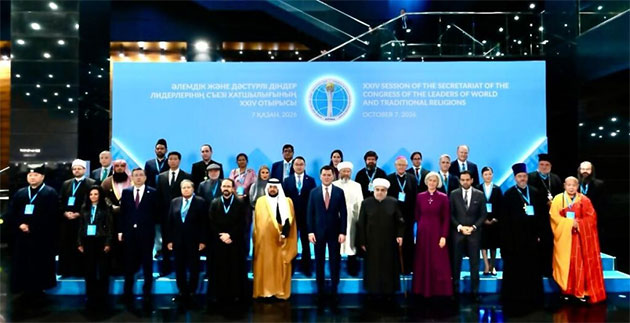
Based in 2003, the Congress has established a unbroken discussion board for representatives of various faiths. At its twenty fourth Secretariat assembly in Astana on Oct. 7, members repeatedly requested what the belief constructed by way of these encounters ought to now produce.
“The chance is to stroll collectively and never simply discuss collectively,” Bishop Jo Bailey Wells of the Anglican Communion informed delegates.
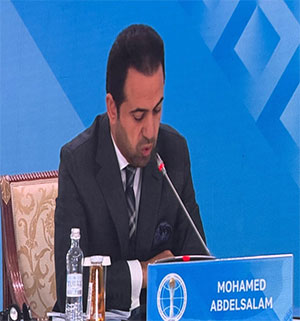
Mohamed Abdelsalam, secretary-general of the Muslim Council of Elders, warned that “a declaration that’s not carried out loses its performance.” He known as for clear duties and follow-through that might be assessed in opposition to outcomes.
Kozhabay sees youth peace training as a place to begin for cooperation with Soka Gakkai. She proposed connecting the experiences of Hiroshima, Nagasaki and Semipalatinsk by way of youth exchanges, academic packages and public dialogue.
Drawing on the expertise of Soka academic establishments in peace training and nuclear abolition training, Soka Gakkai can also be exploring the potential of sharing academic packages for younger individuals by way of cooperation with Kazakhstan.
One venture already underneath dialogue is a Kazakh-language version of six essays on peace by the late Daisaku Ikeda, former president of SGI. Editions already existed in English, Russian and Uzbek, with publication in Kazakh deliberate for 2027.
The e book will not be the partnership’s overarching goal. It’s one preliminary enterprise meant to encourage younger individuals to consider peace.
Kozhabay mentioned she didn’t need cooperation confined to a predetermined record of tasks. She welcomed Soka Gakkai’s proposals for joint publications, academic supplies and cultural exchanges, in addition to alternatives for her middle to take part within the group’s worldwide initiatives.
“For me, a real partnership ought to work in each instructions,” she mentioned.
Placing Shared Ethics Into Follow
The potential areas of cooperation lengthen past nuclear abolition and peace training.
On the October assembly, the Secretariat adopted a doc on religions’ function in addressing local weather change and an moral code for synthetic intelligence in spiritual contexts.
Kozhabay equally proposed bringing spiritual leaders, researchers, expertise specialists and younger individuals collectively to debate digital manipulation, dependable spiritual data and human duty.
Japan’s Affiliation of Shinto Shrines, Jinja Honcho, additionally contributed to the local weather doc. Its involvement illustrates how cooperation with Japan attracts on a couple of spiritual custom.
Each paperwork are advisory, nevertheless. Additional discussions are additionally wanted earlier than proposals for academic use of the documentary, environmental cooperation or AI-related exchanges change into new joint packages. Present achievements and potential tasks should be distinguished.
The assembly additionally supported a Kazakhstan–Holy See initiative in regards to the rights of youngsters with incurable ailments. The frequent thread connecting these totally different topics is an effort to translate shared moral convictions into cooperation that protects human dignity.
Turning Belief Into Outcomes
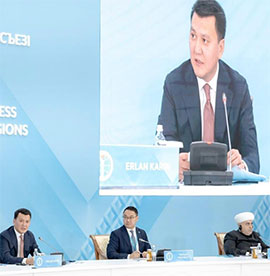
Vice President Erlan Karin, who chaired the assembly, emphasised the necessity to flip selections into motion. He requested the Secretariat and its companions to arrange an idea and phased plan for a proposed World Motion for Peace, with preliminary leads to 2027, forward of the ninth congress in 2028.
Kozhabay was express in regards to the limits of the Congress’s authority.
“The Congress can not negotiate arms-control treaties, and it mustn’t fake to switch governments, diplomats or worldwide authorized mechanisms,” she wrote.
Its contribution, she mentioned, was to protect consciousness of nuclear weapons’ humanitarian penalties, have interaction youthful generations and keep dialogue throughout political divides. Even with out negotiating agreements, it may assist construct the general public, moral and humanitarian assist wanted to maintain them.
That’s the place the 2 interviewees’ views converge: remembering nuclear struggling shouldn’t be confined to trying backward. Training and worldwide cooperation can carry that reminiscence into selections in regards to the future.
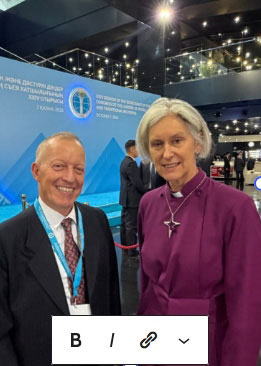
After the Oct. 7 assembly, Paolo S. Affatato of the Catholic information company Agenzia Fides requested Bishop Bailey Wells whether or not religious diplomacy really influenced politics. This correspondent audio-recorded the trade.
“Definitely, I believe it does have influence,” she replied, whereas expressing a want for better affect at authorities degree.
“There’s nothing like assembly in individual to construct these relationships,” she mentioned.
What these relationships produce is the subsequent query. Cooperation developed over years between SGI and Kazakhstan’s diplomatic establishments and civil society is now informing discussions of latest tasks with ICIID.
For Kozhabay, success over the subsequent decade ought to be measured not just by the variety of conferences held, however by what was “really created, carried out or modified” as a result of individuals got here collectively.
For these in search of to protect the recollections of Hiroshima, Nagasaki and Semipalatinsk, that’s greater than a query about the way forward for interfaith dialogue. It’s a query of what may be performed now to forestall nuclear affected by being repeated.
This text is delivered to you by INPS Japan in collaboration with Soka Gakkai Worldwide in consultative standing with UN ECOSOC.
IPS UN Bureau



© Inter Press Service (20261105074858) — All Rights Reserved. Authentic supply: Inter Press Service