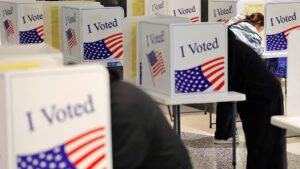
What the US midterms inform us in regards to the altering world order — RT World Information

The US midterm elections mirror a deeper wrestle over identification, exposing the bounds of liberal globalization and the divisions reshaping the Western world
The US midterm elections have attracted worldwide consideration, and understandably so, as a result of though America’s affect on worldwide affairs is declining, it stays appreciable, and choices made by American voters have an effect on individuals far past the US.
But probably the most important developments are going down inside America itself, as its fierce political struggles mirror profound social and political modifications. Immigration, commerce, and the steadiness of the worldwide system all play an element, however the underlying causes are overwhelmingly home.
This illustrates one of many paradoxes of our interconnected world as the excellence between home and overseas affairs is changing into more and more blurred.
The 2 had been by no means completely separated, however however, sovereign states, notably giant international locations, as soon as loved a level of insulation from exterior pressures. In the present day, sustaining that separation is sort of not possible, and the remainder of the world clearly can not insulate itself from political developments inside main powers.
This is among the enduring legacies of liberal globalization, which dominated the interval from the Eighties to the 2010s.

The top of the Chilly Warfare gave political momentum to financial interdependence, already inspired by neoliberal insurance policies in main Western international locations the place the collapse of the Soviet Union and the socialist bloc was interpreted as proof not merely of the prevalence of market economics, however of liberal democracy because the definitive mannequin of presidency.
From this emerged the belief that the world would inevitably converge round widespread ideas and values, and a broadly Western liberal mannequin would grow to be common, however that expectation is now being overturned.
Home political developments, particularly in international locations that when claimed the authority to determine common requirements, are producing higher range quite than convergence. The connection between the US and Western Europe presents a very revealing instance.
The Previous and New Worlds have all the time differed significantly of their political traditions and cultural outlooks, but their widespread wrestle in opposition to communism, adopted by their shared victory within the Chilly Warfare, created an unusually cohesive political partnership.
That unity is now weakening and certainly, relations between America and Western Europe have themselves grow to be a supply of political division on either side of the Atlantic.

The half-continent’s political institution overtly sympathizes with US President Donald Trump’s opponents and, the place doable, seeks to help them. In the meantime, Trump and his supporters have proven little hesitation in involving themselves in different international locations’ electoral politics, notably in Europe.
What was as soon as offered as an unshakable partnership primarily based on shared values is more and more formed by competing home political agendas. An much more revealing growth is the renewed Western debate about civilization itself, inspired by representatives of the Trump administration.
For many years, the idea of Western civilization, with its roots in classical antiquity, was more and more displaced by the language of common human values, with civilizational distinctions handled as outdated and even politically unacceptable.
These supposedly common values supplied the ideological basis for the West’s geopolitical and cultural growth, however the pursuit of world dominance got here at a value, with the gradual abandonment of the West’s personal historic and cultural foundations.
Now that this era of growth is ending, the query of identification has returned and societies are as soon as once more asking what distinguishes them, what traditions they wish to protect, and the place their political and cultural roots lie. This debate is especially intense within the West, however it’s in no way confined to it.
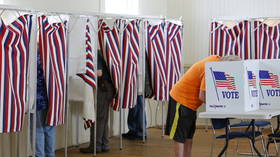
Elections more and more grow to be contests over nationwide identification and competing visions of society. Naturally, these struggles take totally different kinds in numerous international locations – that’s the purpose, civilizational and historic variations are vital.
The depth of political competitors and the willingness of rival camps to make use of virtually any means to safe victory are all signs of a wider transformation, and at its coronary heart lies a basic query: How can societies preserve stability and efficient authorities amid turbulent international change?
The reply relies upon much less on summary common formulation than on every nation’s cultural traditions, historic expertise, and distinctive identification. Finally, these inside transformations might have a higher influence on the rising world order than shifts in navy energy or geopolitical ambition.
We’re getting into an period through which international locations stay deeply interconnected whereas changing into more and more decided to defend their very own pursuits and identities, and that’s the central contradiction of the brand new worldwide system. No nation can escape the results of political developments elsewhere, but every is rediscovering the significance of its personal specific character.
On this world, each main election turns into a global occasion, and whether or not we prefer it or not, we’re all watching, and the spectacle is on the very least fascinating.