The Pressing Want for Analysis — World Points

URBANA, Illinois, US, October 28 (IPS) – Lately, nations all over the world, together with the USA of America, celebrated the United Nations 2026 World Meals Day. This yr’s theme, “Innovate Immediately. Nourish Tomorrow,” highlighted how efforts to foster innovation and forward-thinking options may also help to make sure that everybody in our world has entry to adequate, various, secure, and nutritious meals whereas safeguarding the planet for future generations.
However realizing this imaginative and prescient and creating forward-thinking options to assist nourish 9 billion folks together with the 645 million individuals who nonetheless face starvation, requires recognizing and investing in analysis on rising agricultural challenges, particularly people who stay neglected and underestimated.
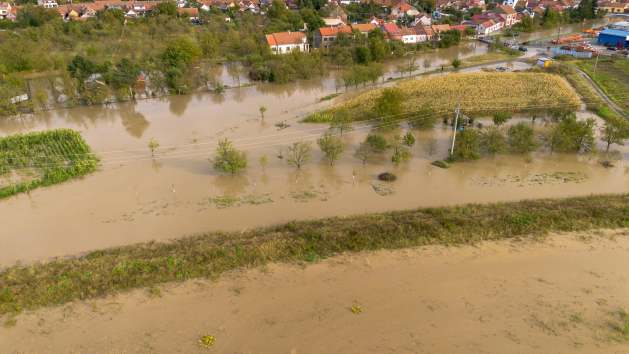
Arguably, flooding is without doubt one of the rising but underestimated and underappreciatedthreats to vital agricultural crops, together with rice and corn, and to meals safety, which has elevated in frequency and depth in recent times due to local weather change.
Globally, between 2008 and 2018, in keeping with a Meals and Agriculture Group of the United Nations report, flooding was ranked because the second driving issue ensuing on crop manufacturing losses.
Flooding deprives soil and plant roots of oxygen, a essential ingredient for all plant-sustaining life processes, together with water uptake, respiration, and photosynthesis. Consequently, crops’ mobile, physiological, metabolic, and biochemical processes are disrupted, impacted, and impaired. With out oxygen, crops’ development and growth is impacted, and if flooding persists for days, they suffocate and die.
Sadly, lots of the at the moment grown agricultural crop varieties can not stand up to flooding and crop and yield losses of as much as 100% have been reported each nationally and globally. Crops and yield losses arising due to flooding translate into financial losses and in the end meals insecurity.
Alarmingly, flooding additionally negatively impacts soil biology, chemistry, functioning, high quality, and microbial communities whereas disrupting the numerous helpful relationships crops kind with microbes, relationships that assist crops cope with different stressors and promote development and resilience.
Concerningly, flooding is a complicated, sequential plant stressor, and its detrimental impacts on crops persist even after floodwaters recede. After floodwater subsides, agricultural crops enter the second part of flooding stress, known as the post-flooding stress part.
Through the post-flooding stress part, crops face further stresses, together with reoxygenation and dehydration, impaired root operate, and dietary deficiencies as a result of altered nutrient uptake. On the identical time, crops are susceptible to pathogens, illnesses, and pests, threats that may collectively result in agricultural crop losses.
The excellent news, nevertheless, is that science, analysis, and scientific discoveries can present the forward-thinking options wanted to safeguard our meals techniques in opposition to rising threats.
However for analysis to supply these options, researchers working to deal with these questions should be funded.
Take the case of flooding. With funding and investments, researchers can pursue a number of analysis pathways to grasp flooding whereas additionally pursuing daring and modern concepts with the objective of creating and advancing science-based options to mitigate the detrimental and detrimental impacts flooding has on agricultural crops and soils that underpin plant and ecosystem well being.
First, scientists can construct a complete understanding of flooding, together with discovering the numerous methods crops use to withstand and get better from flooding and post-flooding stress.
Second, researchers can pursue each short- and long-term field-based experiments that incorporate hundreds of crop varieties, together with wild varieties, throughout completely different soil sorts to determine a extra complete understanding of flooding and post-flooding impacts on plant and soil well being, biology, chemistry, and microbes, in addition to the legacy and cascading results of flooding.
Concurrently, this analysis can establish microbial taxa, communities, capabilities, and traits that enhance flooding tolerance. Moreover, researchers can work to find out whether or not the present administration practices which were put in place to guard soil well being and assist crops resist biotic and abiotic threats, together with regenerative practices, are preserving tempo with intensifying flooding occasions.
Third and most significantly, with funding, scientists from a number of disciplines, together with plant biology, entomology, engineering, agronomy, microbial ecology, predictive modelling, breeding, and soil well being biology, can collaborate to design modern options and speed up the invention of recent options to flooding.
In the end, mitigating threats like flooding that might derail and undermine progress towards constructing climate-resilient crops and enhancing soil well being and biology requires a complete understanding of flooding and its impression on soil well being, biology, and crops.
With adequate funding and funding, scientists, in collaboration with stakeholders, can develop transformative options to deal with flooding and fulfill 2026 World Meals Day theme “Innovate right this moment. Nourish tomorrow.” Time is of the essence.
Esther Ngumbi, PhD, is an Affiliate Professor within the Division of Entomology on the College of Illinois Urbana Champaign.
© Inter Press Service (20261028120151) — All Rights Reserved. Unique supply: Inter Press Service