
The place Are the Important Minerals within the Negotiations? — World Points


photographed on the Ministerial Excessive-Degree on the Launch of the Second World Inventory Take, captures the dilemmas of the COP31 negotiations. Credit score: UN Local weather Change/Kiara Price
ANTALYA, Türkiye, November 18 (IPS) – You can not construct a wind turbine, electrical car, battery or photo voltaic grid with out essential minerals. Lithium, nickel, cobalt, graphite and uncommon earths are as important to the clean-energy transition as renewable energy itself.
But at COP31 in Antalya, the place governments are negotiating the way to ship a “simply transition” away from fossil fuels, essential minerals stay largely absent from the political highlight. Whereas negotiators debate equity, jobs and decarbonisation, international locations elsewhere are forging mineral alliances, securing provide chains and pursuing strategic useful resource offers outdoors the UN local weather course of.
The disconnect raises a central query: Can the worldwide power transition be referred to as simply if it fails to deal with the place the minerals will come from, who controls them, and who bears the environmental and social prices of extracting them?
That query sits on the coronary heart of an rising debate at COP31. The transition to scrub power is dependent upon an unlimited growth of mineral extraction, but the governance programs wanted to make sure equity, accountability and neighborhood participation stay fragmented and incomplete.
Whose Minerals, Whose Future?
For Indigenous peoples, the talk shouldn’t be theoretical.
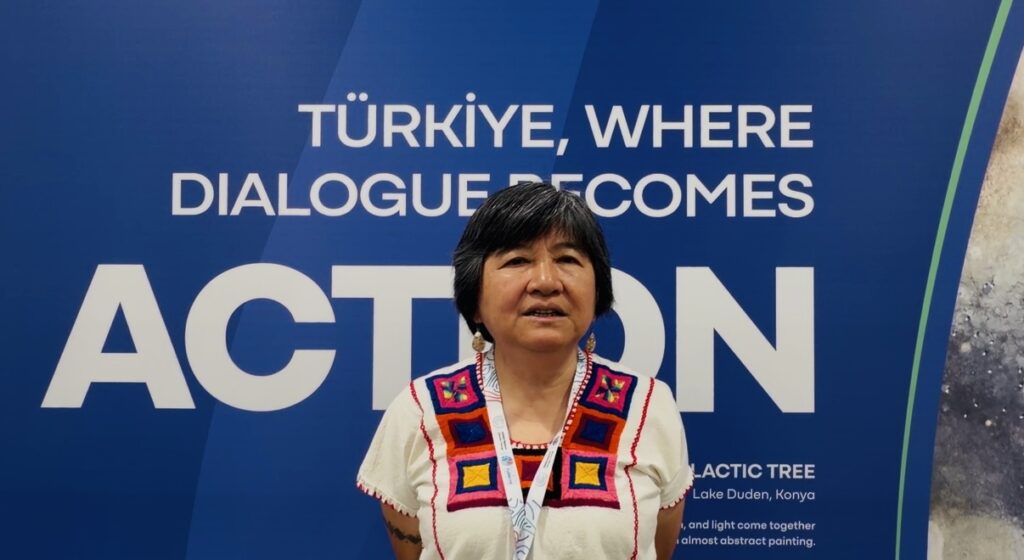
Joan Carling, a 2024 Proper Livelihood Award laureate and govt director of Indigenous Peoples Rights Worldwide (IPRI), mentioned the transition to a low-carbon financial system should not come on the expense of Indigenous communities.
Based on Carling, Indigenous territories maintain an estimated 54 p.c of essential mineral deposits. That makes Indigenous communities central to the power transition, whether or not they’re included in selections or not.
Carling acknowledges an vital breakthrough achieved at COP30 in Belém, the place negotiators recognised Indigenous peoples’ rights to land, territories, assets, self-determination and free, prior and knowledgeable consent. It was a milestone, she says, however recognition alone shouldn’t be sufficient.
“It’s our assets; it’s going to be our minerals, and our lands will probably be used for the transition. We’re not on the desk. We’re not those taking the choices,” Carling mentioned.
Her concern extends past illustration. As demand for transition minerals rises, she fears the world might merely exchange one extractive mannequin with one other.
“Simply transferring away from fossil-fuel extractivism to extractivism once more for essential minerals,” she mentioned.
The implications, she argues, are already seen in lots of Indigenous territories.
“We’ve already seen the legacy of mining, which has fully devastated our territories, destroyed our livelihoods and our meals programs, and polluted rivers and water our bodies,” she mentioned.
For Carling, the difficulty shouldn’t be merely whether or not mining ought to happen, however who will get to outline the phrases beneath which it takes place. Indigenous peoples, she argues, proceed to be handled primarily as stakeholders to seek the advice of somewhat than as rights-holders with decision-making authority.
As world demand for essential minerals accelerates, many Indigenous leaders worry that local weather targets might grow to be the newest justification for initiatives imposed on communities with out significant participation. In that state of affairs, the transition could scale back carbon emissions whereas reproducing long-standing patterns of exclusion and extractivism.

A Struggle Over the Which means of ‘Simply’
Contained in the COP31 negotiations, advocates are working to make sure that the transition shouldn’t be mentioned solely in technical or financial phrases.
Whereas essential minerals are largely absent from the draft political declaration, they haven’t disappeared totally from the discussions.
Negotiators at COP31 are at the moment working to ascertain a Simply Transition Mechanism meant to assist international locations translate broad commitments into sensible motion.
The mechanism is predicted to be one of many principal outcomes of the COP31 talks, making debates over rights, participation and worth addition particularly vital for mineral-producing communities.
Annabella Rosemberg, senior adviser on simply transition at Local weather Motion Community (CAN), says the evolving Simply Transition Mechanism contains references to mineral extraction, Indigenous rights, native participation and worth addition.
For Rosemberg, nevertheless, the bigger problem is guaranteeing that social justice receives the identical consideration as technological deployment.
“There’s way more speak about electrification than there’s about simply transition,” she mentioned. “What must be rebalanced shouldn’t be solely speaking about targets; it’s additionally speaking about how we centre communities.”
She argues that local weather negotiations can nonetheless play an vital position by legitimising different growth fashions that place native communities, Indigenous rights and equitable financial advantages on the heart of the transition.
“This determination on minerals is at the least giving legitimacy to a distinct story that must be instructed,” Rosemberg mentioned. “The place rights are vital, the place neighborhood voices are vital, and the place worth addition is vital.”
Nonetheless, she warns that progress on language doesn’t robotically translate into motion.
“We’re getting nice language on simply transition,” she mentioned. “However we have to have one thing that has some enamel to make it occur.”
That problem runs via lots of the discussions at COP31. Negotiators more and more agree on broad ideas, however implementation stays unsure. With out stronger establishments, clearer accountability mechanisms and devoted monetary help, advocates worry that commitments to justice might stay largely aspirational.
The chance, Rosemberg says, is that communities see limitless consultations, experiences and coverage statements whereas selections proceed to be made elsewhere.
Producer Nations Search a Greater Share
The talk extends past Indigenous communities to international locations anticipated to provide the minerals wanted for the power transition.
Brazil, for instance, possesses important reserves of graphite, nickel, lithium, niobium and uncommon earths. In September 2026, the nation adopted a Nationwide Coverage on Important and Strategic Minerals and established a devoted council throughout the Presidency, signalling a rising recognition of the sector’s strategic significance.
“There isn’t a power transition with out mining,” mentioned Gabriella Salazar, a Brazilian mining legislation specialist.
As demand for minerals grows, international locations like Brazil face a well-known dilemma. They possess the assets required by industrialised economies however danger remaining suppliers of uncooked supplies whereas higher-value manufacturing and processing actions happen elsewhere.
Salazar argues that producer international locations ought to have alternatives to seize extra of the financial worth generated by the transition.
“My suggestion can be for the COP31 simply transition outcomes to formally recognise essential minerals as an integral a part of the power transition provide chain,” she mentioned.
Such recognition, she argues, might assist unlock funding, technical cooperation and capacity-building that might permit producing international locations to maneuver past extraction and into refining, processing and manufacturing.
The query of worth addition has grow to be a recurring theme amongst growing international locations. Many governments see the clean-energy transition not solely as an environmental necessity but in addition as a possible growth alternative. Whether or not that chance materialises could rely on how future provide chains are structured and who captures the best financial advantages.
COP Talks, ASEAN Acts
The talk has now unfold past COP31 negotiations.
Whereas negotiators in Antalya debate the ideas of a simply transition, governments elsewhere are transferring to safe entry to the minerals wanted to energy it.
On November 17, leaders gathered for the forty sixth ASEAN Summit in Manila, the place essential minerals have been among the many points anticipated to be mentioned, in keeping with Australian Prime Minister Anthony Albanese. But in contrast to synthetic intelligence and regional financial cooperation, essential minerals didn’t emerge as a outstanding function of the summit’s official final result assertion.
That absence displays a broader pattern. Relatively than being addressed via a devoted multilateral framework, questions of mineral safety, processing capability and supply-chain resilience are more and more being pursued via regional discussions, bilateral agreements and strategic partnerships.
An IISD evaluation of greater than 200 latest commerce and financial agreements discovered that 139 contained critical-mineral provisions, highlighting how mineral diplomacy is essentially advancing outdoors the UN local weather course of.
Amongst them is the France-Malaysia settlement on essential minerals cooperation, signed forward of COP31, which goals to strengthen collaboration on mineral provide chains, processing and funding. Important minerals have additionally featured prominently in discussions among the many Quad international locations, reflecting mounting concern over entry to the assets wanted for the power transition.
The distinction with COP31 is placing. Whereas negotiators in Antalya give attention to emissions reductions, local weather finance and the ideas of a simply transition, lots of the sensible selections shaping future mineral provide chains are more and more being made elsewhere.
The result’s a widening governance hole. Local weather negotiators are debating what a simply transition ought to appear to be, whereas the structure of the critical-minerals financial system is taking form past the COP course of.
The Lacking World Rulebook
That fragmentation worries Michael Franczak, an financial governance researcher on the United Nations College Centre for Coverage Analysis (UNU-CPR) and co-author of the latest report, Governing Important Minerals: Advancing World Cooperation in a Fragmented Panorama.
“Important minerals could also be absent from the official COP31 agenda, however they’re hovering over all the things,” Franczak mentioned.
Based on Franczak, no single establishment at the moment governs the intersection of mining, power, commerce, funding, industrial technique and growth. But all of those sectors more and more affect the success or failure of the worldwide power transition.
The absence of an overarching framework leaves international locations, communities and corporations navigating a quickly evolving panorama formed by overlapping establishments and competing priorities.
Relatively than calling for a single new treaty, Franczak advocates a extra pragmatic method that’s based mostly on stronger coordination amongst present organisations. Such a system might enhance transparency, strengthen requirements, broaden participation by producing international locations and create mechanisms for addressing cross-border challenges that no single establishment can handle alone.
The aim, he argues, is to not sluggish the power transition however to make sure that it unfolds in a good, predictable and accountable method.
With out that coordination, the world dangers repeating errors which have lengthy characterised world useful resource extraction, the place wealth accumulates removed from the locations the place assets are extracted.
A Race Towards Time
As COP31 enters its last days, the query dealing with negotiators is now not whether or not essential minerals matter to the power transition.
The query is whether or not world governance can meet up with a quickly accelerating mineral race earlier than inequalities grow to be embedded within the foundations of the inexperienced financial system.
For Indigenous communities, the problem is guaranteeing that rights are revered and consent is significant. For producer international locations, it’s securing a justifiable share of the financial alternatives created by the transition. For policymakers, it’s designing establishments able to connecting local weather targets with commerce, growth and useful resource governance.
The power transition could also be important for addressing local weather change, however consultants warn that its legitimacy will in the end rely on how its advantages and burdens are distributed.
As governments rush to construct the clean-energy financial system, Franczak cautions towards assuming that cleaner applied sciences robotically produce fairer outcomes.
“With out higher guidelines and stronger cooperation, we danger repeating an previous sample: assets are extracted in growing international locations, whereas a lot of the financial worth is captured elsewhere and native communities bear the environmental and social prices,” he warns
IPS UN Bureau Report



© Inter Press Service (20261118142301) — All Rights Reserved. Unique supply: Inter Press Service