
The Iranian Maritime Cyber Risk and the Altering Nature of Worldwide Battle – The Cipher Transient
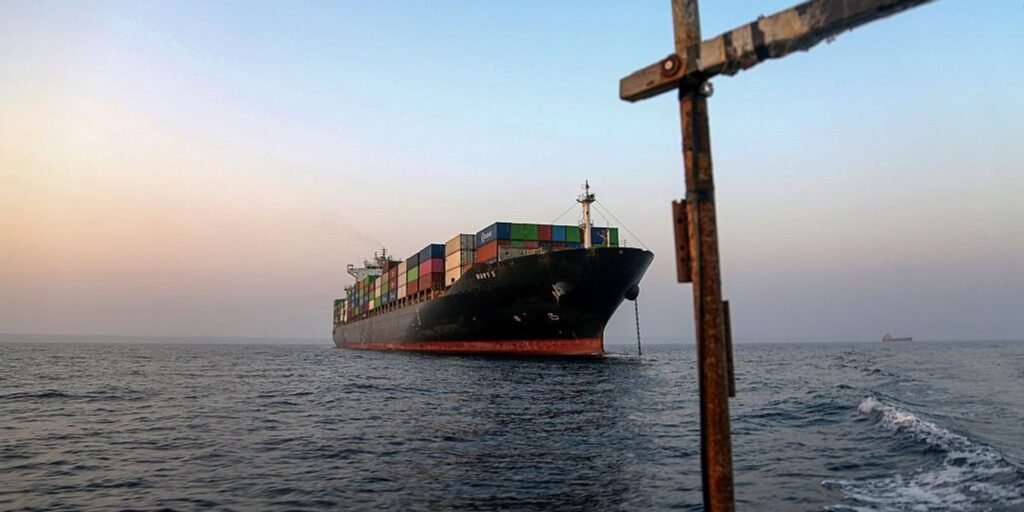
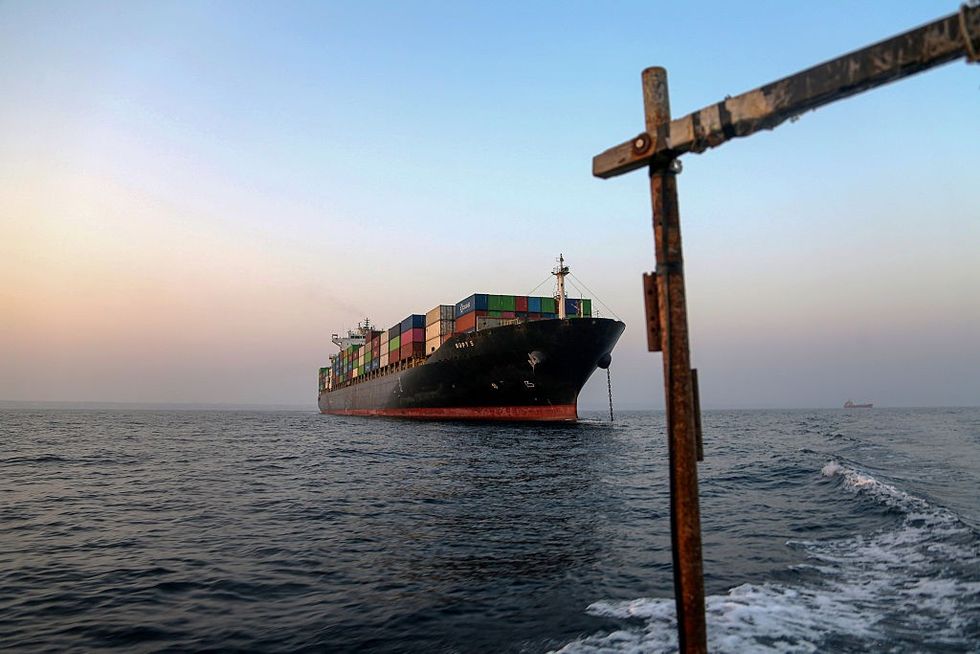
The Cipher Transient spoke with Norm Roule, the previous U.S. nationwide intelligence supervisor for Iran, about how Tehran’s maritime cyber capabilities have advanced, what the newest investigation may imply for industrial delivery, and whether or not the time period “grey zone” nonetheless captures the sorts of assaults governments and companies now face.
The Cipher Transient: Ought to the newest report of Iranian cyberattacks towards worldwide delivery come as a shock?
Roule: The reviews are troubling, however the information received’t shock policymakers or the delivery business. There’s a substantial physique of reporting on Iranian cyber threats to worldwide delivery courting again no less than to 2019.
The Cipher Transient: When did we first see proof of Iranian curiosity in operations to break or offensively manipulate ships?
Roule: First, we should always do not forget that as not too long ago as August of this 12 months, the U.S. Coast Guard and Federal Bureau of Investigation had been investigating potential Iranian involvement in cyber incidents affecting two power tankers, the VL Prosperity and the Kohaku, touring towards the United States. It’s laborious to not hear the echo of this earlier episode within the newest report.
There’s appreciable proof that Iran has built-in cyber and digital warfare capabilities into its maritime operations. In July 2019, the British-flagged Stena Impero and Liberian-flagged Mesdar reportedly skilled GPS interference earlier than being intercepted by Iranian forces. The U.S. Maritime Administration subsequently warned shippers within the area to count on GPS interference, bridge-to-bridge communications spoofing, or different malign communications jamming with little to no warning.
By 2020, Western cybersecurity specialists and intelligence sources recognized Iranian curiosity not merely in amassing intelligence on industrial delivery however in creating the aptitude to inflict bodily harm on vessels. We then noticed reporting that documented Iranian concentrating on of delivery firms, port services, satellite tv for pc communications, logistics firms, and industrial management programs.
In July 2021, Sky Information reported on leaked paperwork allegedly produced by Shahid Kaveh, an offensive cyber unit related to the Islamic Revolutionary Guard Corps (IRGC). The paperwork described Iranian curiosity in cyber operations towards civilian infrastructure, vulnerabilities in maritime satellite tv for pc communications, and even the potential for sinking industrial vessels.
Later that 12 months, Microsoft’s Risk Intelligence Heart reported that an Iran-linked cyber group had focused greater than 250 organizations throughout a number of strategically necessary sectors. Though fewer than 20 had been compromised, the goal listing was vital. It included Persian Gulf ports, worldwide maritime transportation firms, cargo transportation companies, satellite tv for pc imagery suppliers, and American and Israeli protection firms.
Microsoft assessed that the marketing campaign supported Iranian authorities efforts to observe adversary safety organizations and industrial delivery and to enhance Tehran’s contingency planning. Of specific significance was the obvious Iranian curiosity in acquiring proprietary delivery data and industrial satellite tv for pc imagery.
The Cipher Transient: Are you able to present examples of previous Iranian operations towards maritime pursuits?
Roule: Cyber exercise assessed to originate with Iran focused Egyptian delivery and marine companies firms starting in July 2022. In Could 2023, a possible Iranian actor focused Israeli industrial web sites, together with these of delivery and logistics firms. The Egyptian case is especially noteworthy as a result of it illustrates that Iranian maritime intelligence pursuits weren’t confined to American or Israeli targets.
The Cipher Transient: What motion has the USA taken towards the Iranian officers accountable for creating these capabilities?
Roule: In February 2024, the U.S. Treasury Division sanctioned six senior officers of the IRGC Cyber-Digital Command for actions concentrating on essential infrastructure in the USA and different nations. Amongst these sanctioned was Hamid Reza Lashgarian, the identical particular person recognized within the 2021 Sky Information report as overseeing the Iranian cyber intelligence group related to analysis into maritime vulnerabilities. Treasury confirmed that Lashgarian headed the IRGC Cyber-Digital Command and was additionally a commander within the Qods Pressure.
The Cipher Transient: Has Iranian delivery itself been the sufferer of great cyberattacks?
Roule: I can consider a few circumstances, though there could also be others. In two main cyberattacks in 2025, the anti-regime hacktivist group Lab Dookhtegan, or “Sewn Lips,” claimed to have disrupted satellite tv for pc communications throughout greater than 100 vessels operated by Iran’s two largest state-linked delivery firms.
The group reportedly compromised an Iranian telecommunications supplier, disrupting ship-to-shore communications and monitoring programs on vessels belonging to the Nationwide Iranian Tanker Firm and the Islamic Republic of Iran Delivery Strains. The primary operation, in March 2025, reportedly affected 116 Iranian vessels. A second operation in August reportedly affected 64 ships. Taken collectively, these incidents seem to signify a few of the most intensive cyber disruptions skilled by Iran’s maritime sector.
The Cipher Transient: How has Iran’s maritime cyber program advanced, and why is it so necessary to Tehran?
Roule: Iran’s maritime cyber actions seem to have advanced in phases. Tehran’s integration of cyber and digital warfare instruments into its regional maritime operations was evident by 2019. Iran subsequently elevated its give attention to delivery firms, port networks, satellite tv for pc communications, and logistics companies for intelligence assortment and wartime contingency planning.
If confirmed, the newest suspected assaults towards infrastructure and industrial vessels would present that Iran has moved to extra disruptive maritime capabilities as a part of a worldwide coercion marketing campaign. Notably, Iranian concentrating on has lengthy prolonged past American and Israeli pursuits.
As to why this system is so necessary to Iran, Tehran has lengthy understood that its capability to mission energy would rely closely on uneven instruments. Maritime cyber operations supply Tehran a method to avoid Western naval superiority and compensate for its lack of a blue-water navy or abroad army bases. On this means, Iran can lengthen its maritime coercion and affect over the worldwide financial system properly past the Strait of Hormuz and Bab al-Mandeb.
Additionally, Iran doesn’t have to sink a ship to attain a big strategic impact. The propaganda worth of even a failed assault may be substantial. It alerts Iranian intent and geographic attain whereas elevating questions in regards to the effectiveness of Western deterrence. Tehran seemingly calculates that, whether or not profitable or not, such operations can have financial penalties, together with larger maritime insurance coverage premiums, precautionary port closures, delivery delays, extra vessel inspections, provide chain disruptions, and elevated expenditures on cybersecurity and maritime safety. Iran presumably hopes that these prices will translate into home financial and political strain on governments confronting Tehran.
The Cipher Transient: May a cyberattack trigger a vessel to collide with a bridge, run aground, or undergo a catastrophic explosion?
Roule: Most specialists consider that is unlikely, however U.S. authorities authorities have explicitly recognized such situations as credible maritime safety dangers.
Following the 2024 incident in Baltimore that induced the collapse of a significant bridge, the U.S. authorities examined the potential penalties of cyber operations concentrating on industrial vessels. Though the Baltimore incident itself was not a cyberattack, American authorities acknowledged {that a} profitable cyberattack towards a big vessel’s operational know-how may probably produce comparable penalties.
Regardless of the nature of the incident, the implications of a cyber-induced catastrophe involving massive industrial vessels are profound, given the cargoes they carry and their proximity to main inhabitants facilities and important infrastructure.
A major maritime cyber incident involving an power or chemical tanker may have huge environmental, financial, and public security penalties. Close to a significant inhabitants middle, such an incident may additionally produce long-term public well being penalties. The broader financial and homeland safety implications would even be vital. Lastly, American and allied maritime infrastructure is important to U.S. army mobilization, sustainment, and abroad energy projection.
The Cipher Transient: Are we doing sufficient to deal with this risk?
Roule: Possible not, however that doesn’t imply the scenario has been ignored. A lot of the emphasis up to now has understandably been on enhancing the cyber defenses of the delivery business and common safety administration of associated structure.
There isn’t any public proof that Iran has efficiently performed a harmful cyberattack towards a industrial vessel on the excessive seas. It will however be imprudent to imagine that Tehran won’t search to develop these capabilities or use synthetic intelligence to provide such instruments extra shortly.
We are able to additionally say that the worldwide neighborhood has not established credible deterrence towards Iran and different nations deploying these instruments. Sadly, sanctions alone won’t be ample to forestall their employment. A significant risk of army motion will seemingly be required.
The Cipher Transient: What does Iran’s growth of those capabilities inform us in regards to the altering nature of worldwide energy projection?
Roule: We’re watching the character of worldwide energy projection change in actual time.
Iran’s actions ought to reinforce considerations that the devices employed in regional conflicts will more and more be deployed globally, even when standard army operations stay geographically concentrated. The implications are profound. Iran is displaying that adversaries with restricted standard expeditionary army capabilities can probably threaten industrial infrastructure hundreds of miles from their territory and impose excessive prices on adversaries possessing overwhelming standard army superiority.
Different adversaries are watching how this battle performs out. Center powers keen to have interaction in such actions will more and more search to attain the kind of strategic disruption beforehand related primarily with main army and intelligence powers.
This isn’t to recommend that standard army energy has misplaced its significance. Fairly, it’s to acknowledge that neither standard army superiority nor geographic distance supplies the identical diploma of safety towards hostile operations on one’s personal territory that it as soon as did.
The Cipher Transient: Iran is hardly alone on this respect. How do its actions examine with what we now have seen from Russia?
Roule: Russia’s actions have been notably consequential, and there may be little purpose to consider that Tehran has not studied each the character of Russian operations and the worldwide response to them. Moscow has been blamed for a lot of cyber incidents, so I’ll solely cite just a few.
In 2022, a Russian cyberattack towards the Viasat satellite tv for pc communications community disrupted communications and affected European wind power infrastructure. Since then, quite a few operations attributed to Moscow have sought to intrude with satellite tv for pc navigation programs supporting civilian aviation and maritime transportation. France additionally publicly attributed cyber operations towards its pursuits to Russia in 2025.
These actions occurred alongside precise or suspected Russian exterior operations involving arson towards a British warehouse containing tools destined for Ukraine, sabotage concentrating on worldwide air freight networks, underwater telecommunications and power infrastructure, railway infrastructure, drone incidents affecting European airports, and assaults towards industrial vessels within the Black Sea.
It’s troublesome to think about that Tehran has not taken word of the feeble worldwide response to those actions when contemplating its personal offensive cyber operations, threats towards dissidents and journalists overseas, and provision of missile and drone know-how to the Houthis and different proxies.
The Cipher Transient: Has Ukraine’s response to Russian aggression additionally demonstrated the altering geographic boundaries of warfare?
Roule: Ukraine is actually not the ethical equal of Russia or Iran. However in its valiant struggle towards Moscow, it has demonstrated {that a} center energy confronting a conventionally superior adversary can lengthen the geographic scope of battle properly past the principal theater of army operations.
The alleged Ukrainian involvement within the September 2022 destruction of the Nord Stream pipelines, the 2025 operations towards Russian-linked vessels within the Black Sea and Mediterranean, and assaults towards Russian offshore oil infrastructure illustrate the increasing geographic attain of the battle.
More moderen Ukrainian drone operations, together with the November assault at Benghazi, Libya, on the Russian corvette Merkury, which sank, and the cargo vessel Angara, along with strikes on a Russian corvette and a Russian cargo ship within the Gulf of Finland, additional display the flexibility of a rustic with restricted standard expeditionary capabilities to threaten its adversary’s pursuits throughout a number of theaters.
The strategic lesson is that nations geographically distant from a battle might nonetheless discover themselves, their territorial waters, or their industrial infrastructure drawn into its battlespace with little discover. A battle which may as soon as have been thought to be regional can now generate safety penalties throughout a number of continents.
The Cipher Transient: What do these developments inform us in regards to the altering nature of warfare?
Roule: We’re at a outstanding second in fashionable army historical past, however we must be cautious about suggesting that we totally perceive the place these developments will lead. Nonetheless, sure developments are clear.
First, Iran’s actions within the Center East illustrate how fashionable conflicts more and more unfold alongside an unpredictable, extended, and multi-theater continuum slightly than by way of clearly outlined durations of conflict and peace. Hostile governments might regard themselves as engaged in a sustained confrontation even when Western governments think about themselves to be at peace. Espionage, affect operations, sabotage, intimidation, political interference, and even overt army operations can happen routinely, concurrently, and sometimes in plain sight.
Subsequent, the geographic boundaries of a battle have gotten more and more porous, making the normal distinction between the entrance line and the rear space much less significant. A conflict in Ukraine may result in sabotage in England, Germany, and the Baltic Sea. A battle involving Iran can generate assassination plots in the USA, cyberattacks in Europe, and threats towards delivery in a number of oceans that undermine the economies of distant nations. A future battle over Taiwan may contain the disruption of civilian infrastructure in continental North America.
Lastly, nations that aren’t direct army members in a battle might however expertise its financial, safety, and bodily penalties with out having the ability to cease the aggressor from repeating its assaults.
The Cipher Transient: How does this modification the safety calculations of governments and industrial enterprises?
Roule: A number of factors come to thoughts.
Nations are studying that defenders should defend an unlimited community of services and industrial actions, whereas adversaries can focus their restricted assets on chosen aims. As shippers within the Gulf will seemingly agree, firms are studying that safety by the worldwide neighborhood towards open aggression is neither assured nor full.
Governments and companies should now acknowledge that comparatively cheap hostile operations can compel them to make substantial investments in safety, redundancy, intelligence assortment, and infrastructure safety. An adversary needn’t destroy a industrial facility to make its operation costlier, politically controversial, or commercially unattractive.
Industrial and civilian infrastructure will stay a strategic middle of gravity in future conflicts. The excellence between industrial safety and nationwide safety will grow to be more and more troublesome to maintain.
The Cipher Transient: Is the time period “gray-zone battle” nonetheless satisfactory to explain what we’re witnessing?
Roule: More and more, the terminology appears inadequate to convey the open depth of the actions being undertaken. Its continued use might even be softening perceptions of the violence concerned.
The phrase is beneficial when describing coercive actions intentionally calibrated to keep away from standard warfare. Nonetheless, there may be nothing inherently grey about Iranian assaults towards industrial delivery, drone assaults towards vessels and airports, cyber operations supposed to destroy civilian infrastructure, or terrorism performed on the territory of one other nation.
Is that this terrorism? Warfare? What’s it? The excellence between wartime and peacetime has been eroding for years as intelligent aggressors exploit how the world has come to acknowledge and cope with aggression.
Russia, Iran, and China have demonstrated that geography, standard army inferiority, and the absence of an expeditionary army functionality not stop a state from imposing excessive prices on distant adversaries or deterring vital retaliation. Their energy comes much less from their army power and extra from making essential financial arteries, industrial infrastructure, and the homeland itself operational theaters.
Sadly, the time period “grey zone” more and more describes the uncertainty, political hesitation, or diplomatic indecision of the defender slightly than the character of the aggressor’s marketing campaign.
Take into account Iran’s reported each day assaults towards civilian delivery within the Strait of Hormuz and the Persian Gulf. Not because the Tanker Warfare of the Eighties, when Iran and Iraq attacked tons of of service provider ships, have civilian vessels from so many nations, carrying cargoes so necessary to the economies of so many others, been subjected to sustained assault by a state asserting authority over worldwide navigation that it has no authentic foundation to train. Greater than two dozen mariners have been killed and plenty of others injured. The lifeless embrace residents of India, Thailand, and the Philippines.
The weak worldwide response just isn’t an remoted case. Iranian and Houthi assaults towards civilian targets through the previous decade elicited a equally restricted international response regardless of leaving lifeless and wounded from many nations. A reported Iranian drone plot towards a Royal Air Pressure base in England and disrupted terrorist operations in France and the USA have additionally failed to provide a publicly evident deterrent impact ample to finish such actions, though a profitable assault may properly have induced a number of casualties.
Whereas the obstacles to conducting such operations have declined, the brink for a direct standard and even unconventional response by the sufferer stays terribly excessive. This outstanding disparity supplies an incredible benefit to adversaries. Policymakers have understandably been reluctant to determine agency pink traces which may constrain their freedom of motion. However within the absence of credible penalties, Iran and its proxies have little incentive to chorus from using these capabilities to their fullest extent, inserting the residents and industrial pursuits of quite a few nations in danger.
The Cipher Transient: Wanting forward three to 5 years, the place are these developments more likely to take us?
Roule: Recognizing that my crystal ball isn’t any higher than that of any of your readers, it appears extremely seemingly that Western nations will see extra frequent assaults towards civilian infrastructure, better geographic growth of regional conflicts, elevated state use of organized crime, and better structural prices for worldwide commerce. Geographic distance, neutrality, and the absence of direct army involvement in a battle will present diminishing safety towards its penalties.
Russia, Iran, and different revisionist and aggressor nations will more and more make use of legal intermediaries to conduct hostile operations, complicating attribution, counterintelligence, and diplomatic responses. Center powers, observing the strategic utility and comparatively restricted penalties related to these operations, will increase their cyber, intelligence, unmanned programs, and covert-action capabilities. Repeated violations of territorial sovereignty with out significant penalties will additional erode worldwide norms, with notably critical implications for smaller states.
The financial and home safety penalties can be substantial. Delivery, aviation, power, telecommunications, and monetary firms will face elevated expenditures on bodily safety, cybersecurity, insurance coverage, infrastructure redundancy, regulatory compliance, and operational restoration. These prices will more and more represent a everlasting geopolitical danger premium slightly than a brief wartime expense.
Industrial enterprises can be uncovered to geopolitical pressures stemming from the nationality of their homeowners, prospects, cargoes, or buying and selling companions. Western governments will dedicate better assets to counterintelligence, counterterrorism, infrastructure safety, and counter-drone capabilities, whereas requiring non-public business to imagine better accountability for dangers traditionally thought to be issues of nationwide protection.
The Cipher Transient: We’ve got lined plenty of floor. How would you summarize the present scenario in closing?
Roule: The worldwide neighborhood is witnessing the accelerating evolution during which states more and more possess the means and willingness to conduct persistent and probably deadly operations towards distant adversaries with out deploying standard army forces or declaring conflict. This capability to mission disruptive and coercive energy is proliferating extra quickly than governments’ capability or willingness to discourage its use.
Standard army superiority is not ample to ensure territorial safety. Center powers, smaller states, and even non-state organizations have acquired devices able to imposing substantial financial and safety prices on a lot bigger powers. Wars will seemingly stay geographically concentrated, however their devices and penalties will grow to be more and more international. This dynamic inherently includes methods the imply civilian infrastructure and worldwide commerce can be more and more frequent parts of interstate battle.
The principal hazard stays not that each hostile operation will trigger catastrophic harm. It’s that the worldwide system is more and more normalizing a degree of interstate violence and coercion that may beforehand have constituted a significant worldwide disaster and produced coalitions to confront aggressors and protect the worldwide order.