Studying in Reverse | The New Yorker
After Tolstoy, I learn Dostoyevsky backward. Dostoyevsky is the one author who’s as a lot enjoyable to learn backward as ahead. “Loads has gathered” is the final line of the third paragraph of “The Gambler.” “We will need to have a chat, nevertheless” is the road that precedes this. And earlier than it comes “In fact, she did it on objective.” Every line is stuffed with pressure. There’s a battle with the world, and likewise an inside battle for the character. No sentence exists with out this torquing. It’s current in virtually every thing Dostoyevsky wrote.
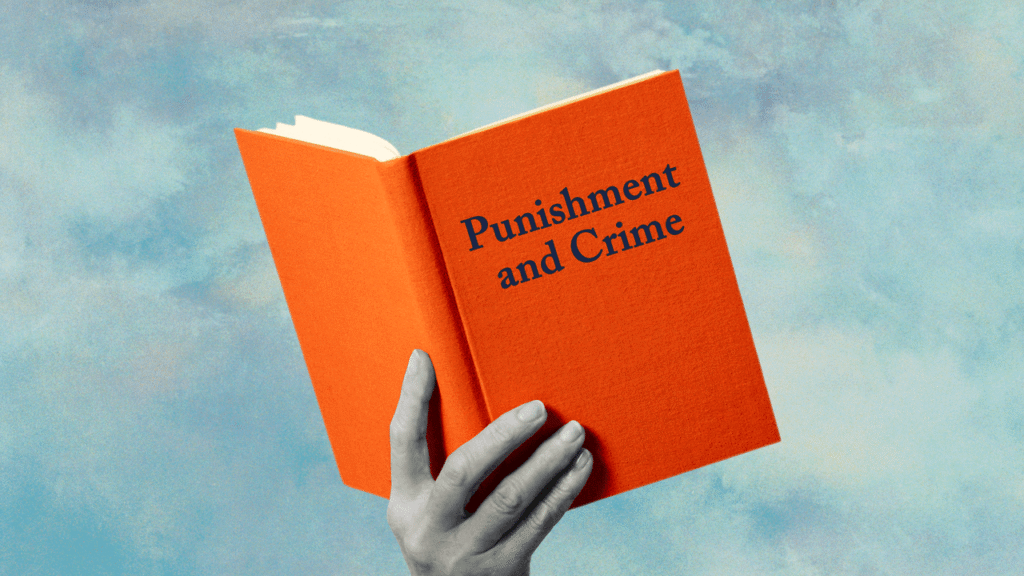
The second paragraph of “Crime and Punishment,” when learn backward, is “He was over his head in debt to the landlady and was afraid of assembly her. And, every time he handed by, the younger man felt some painful and cowardly sensation, which made him wince with disgrace.” Each sentences really feel as in the event that they may very well be the beginning of a narrative.
The minds of Dostoyevsky’s characters are noisy, and so they appear continually on the verge of taking motion. There may be little or no of the tasteless gel that sometimes connects scenes in novels and provides readers a respite as they transfer via a plot. However this very high quality makes every sentence filled with character.
Till I learn Dostoyevsky backward, I’d thought Tolstoy was the larger author. Now I started viewing Tolstoy as somebody who walked alongside the shoreline of life, and Dostoyevsky as somebody who hacked his method deep into the continent of human expertise.
I attempted to mimic Dostoyevsky, however revving my novel to the extent at which he works destroyed the delicacy that pursuits me.
I learn novels backward day-after-day for years. I don’t keep in mind discovering any straightforward options to the technical issues I used to be going through in my very own writing. As a substitute, I had a sequence of insights in regards to the works I used to be studying. There was the second once I realized that the final sentence of Joyce’s quick story “The Useless” mimics a snowflake eddying, and that that is what makes it completely different from different lengthy climactic sentences: “His soul swooned slowly as he heard the snow falling faintly via the universe and faintly falling, just like the descent of their final finish, upon all of the dwelling and the useless.” Or the second once I understood why Chekhov pushes the topics of his sentences to the final third of the sentence, as a substitute of putting them within the first third as is typical for many writers. Doing this makes it troublesome for the reader to know how one can allocate consideration and is without doubt one of the secrets and techniques of Chekhov’s impressionistic fashion. See how he turns the topic of the next sentence virtually into rumour: “The discuss was {that a} new face had appeared on the embankment: a woman with a bit canine.”
My spouse says that we’re harm in relationships however we’re healed in them, too. There was one thing about sitting in my workplace studying sentences that healed me. If I had learn these works ahead, the books would have captured me and I’d have felt my expertise’s insignificance in contrast with that of their authors. Studying backward, a sentence at a time, I might see the alternatives being made and the deep logic that creates a author’s voice. This allowed me to really feel as if I had been within the presence of Joyce, and Tolstoy, and Chekhov. After I learn not-great sentences or not-great tales—Chekhov’s bizarre bandit tales or Tolstoy’s weird “Stroll within the Gentle Whereas There Is Gentle”—I turned conscious that, when you write sufficient, you’ll produce just a few duds. And that you’ll write your good and unhealthy tales whereas dwelling your life: Dostoyevsky along with his playing, Tolstoy along with his sad marriage, Chekhov along with his tuberculosis, Joyce along with his ingesting and mentally unwell daughter.