New Working Group Seeks Justice for Crucial Mineral Mining Communities — International Points

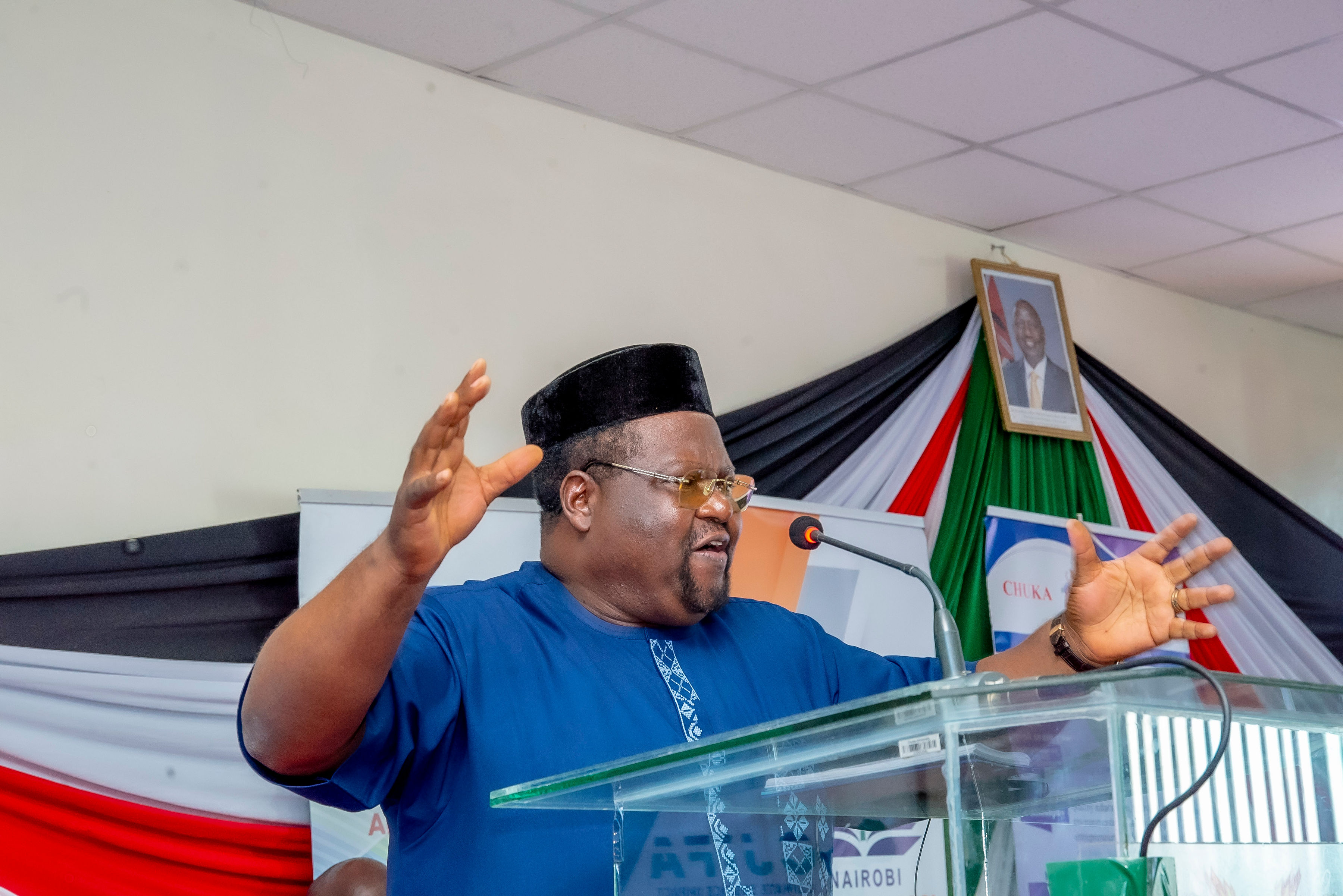
ANTALYA, Türkiye, November 16 (IPS) – A coalition of African civil society organisations, representatives from the Africa Institute of Resilience Research (an unbiased organisation working in analysis, coverage, coaching and capability growth),and representatives from the Financial institution–Civil Society Coalition, which brings collectively seven main regional networks and civil society organisations engaged on local weather and power, have launched the African Non-State Actors Working Group on Crucial Minerals on the sidelines of COP 31 in Antalya, Türkiye.
The launch comes amid rising considerations over environmental degradation and social struggling amongst communities dwelling in energy-transition mineral-rich areas in Africa, the place folks bear the burden of pressured displacement, lack of livelihoods and human rights abuses, with very restricted or generally no advantages in any respect.
“Our shared objective is to advance accountable, people-centred and nature-positive important mineral growth in Africa, with respectable work at its core,” mentioned Dr Augustine Njamnshi, the Government Director on the African Coalition for Sustainable Power and Entry (ACSEA).
“Africa’s mineral wealth should create lasting worth inside Africa by means of native processing, refining, manufacturing and regional worth chains that strengthen productive capabilities, assist African possession and enhance neighborhood wellbeing,” he advised delegates attending the UN local weather summit in Antalya (COP31).
From cobalt, copper, coltan, lithium and different strategic minerals within the Democratic Republic of Congo (DRC) and elements of Zambia, to lithium initiatives in Zimbabwe and graphite in Mozambique, communities in mining areas proceed to face poverty, environmental injury, unsafe working circumstances, displacement, battle and restricted participation in selections affecting their land and livelihoods.
“I imagine the brand new working group will carry extra power if it locations affected communities, Indigenous Peoples, artisanal miners and African civil-society organisations on the centre,” mentioned Appolinaire Zagabe, the Government Director on the DRC Local weather Change Community (Réseau sur le Changement Climatique RDC – RCCRDC).
The working group dedicated to constructing an all consultant and action-orientated platform for collective engagement, bringing collectively organised labour, frontline communities, girls and youth organisations, researchers, environmental actions and different African non-state actors.
“We are going to organise our work round 4 linked features primarily based on concepts and proof, coverage and advocacy, accountability, and voice and participation,” mentioned Njamnshi. “Our objective is to advance freedom of affiliation and collective bargaining, dwelling wages, protected workplaces, social safety, abilities growth and the inclusion of artisanal and small-scale miners,” he advised the delegates in Antalya.
In keeping with Philip Kilonzo, the Head of Coverage, Advocacy and Communication on the Pan African Local weather Justice Alliance (PACJA), the working group will assist bridge present gaps in proof and coordinated advocacy on important minerals and a simply power transition.
“It would strengthen our collective efforts to advertise accountable governance of Africa’s important mineral assets, guaranteeing that their exploitation contributes meaningfully to the event and well-being of African folks,” he advised IPS.
To kick off, the working group will start by growing shared proof and priorities by means of an African Crucial Minerals Points Paper, wider consultations and a standard African Non-State-Actor’s place.
“We are going to discover a Labour and Simply Transition Temporary and an accountability framework or scorecard inspecting decision-making, possession, working circumstances, the distribution of advantages and duty for dangers,” mentioned Njamnshi. “These merchandise shall be developed by means of session and aren’t offered as accomplished devices at this launch.”
organisations and constituencies, together with African civil society organisations, commerce unions, mining-affected communities, Indigenous Peoples and native communities, girls’s and youth organisations, researchers and different non-state actors have additionally been invited to contribute their data, expertise and proposals by means of the ACSEA secretariat.
On the identical time, RCCRDC, as a nationwide civil-society platform in DRC and an accredited observer to the UNFCCC and UNEP, has raised neighborhood considerations in local weather and energy-transition discussions at COP 31.
“We advocate for early neighborhood participation, clear mineral governance, environmental safety, respectable employment, native worth addition and enforceable benefit-sharing,” mentioned Zagabe. “We’ve got additionally proposed a legally binding one % contribution on ultimate merchandise linked to important and power transition minerals to go to neighborhood growth,” he advised IPS.
To date, the DRC Mining Code offers for neighborhood growth agreements and an annual allocation of 0.3% of mining firms’ turnover for neighborhood growth. Nonetheless, in line with Zagabe, implementation, transparency and neighborhood oversight have at all times been inconsistent.
“Our central message is evident, that the worldwide power transition should not reproduce exploitation, battle and inequality in mineral-producing nations,” he mentioned. “Communities should have decision-making energy, authorized safety and a fair proportion of the wealth generated from their assets.”
Because the world transitions to wash power whereas lowering dependence on fossils, demand for important power transition minerals is rising day-after-day, and Africa holds a big share of them.
Nonetheless, the continent consistently exports uncooked supplies and semi-finished merchandise to the developed world, whereas receiving little or no share of the large wealth created from the sector. In keeping with a UN report, nations and mining communities are sometimes left with degraded landscapes, restricted providers, a number of lasting financial alternatives and little or no to indicate from the harnessing of their mineral useful resource wealth.
And now, at COP 31, African leaders and civil society representatives say that it’s time for Africa to take cost. “As Africa, the way in which to go is to make sure that we don’t simply launch our important assets to the developed world, who ultimately go away us with issues,” mentioned Dr Benjamin Mandewere, the Principal Local weather Change Adaptation Officer within the Ministry of Atmosphere, Local weather and Wildlife in Zimbabwe.
“We even have to make sure that environmental and social impression assessments not solely take a look at explicit locations but additionally take native communities on board to make sure that their voices are heard they usually additionally profit from these assets,” he advised the delegates in Antalya.
IPS UN Bureau Report



© Inter Press Service (20261116103249) — All Rights Reserved. Unique supply: Inter Press Service