Anne Carson’s Greatest Books | The New Yorker
“I got here to consider translating as a room,” Anne Carson wrote, in her illustrated guide of poems “Nox,” “the place one gropes for the sunshine change.” When the Swedish Academy awarded Carson the Nobel Prize in Literature this month, they continued a protracted custom of recognizing the superior artwork of poet-translators, from Rabindranath Tagore to Pablo Neruda, Czesław Miłosz, Seamus Heaney, and Jon Fosse. In her essays and poems—as in her translations of Sappho, Euripides, and Sophocles—Carson lays down every phrase as if it have been arrived at after a suspended interval of looking and testing, of slowly gathering a language to light up half-sensed, mysterious ideas and emotions. As I famous earlier this month, her nice theme is eros, and her really distinctive books allow us to inhabit the longing and loneliness of need. Beneath are my favorites.
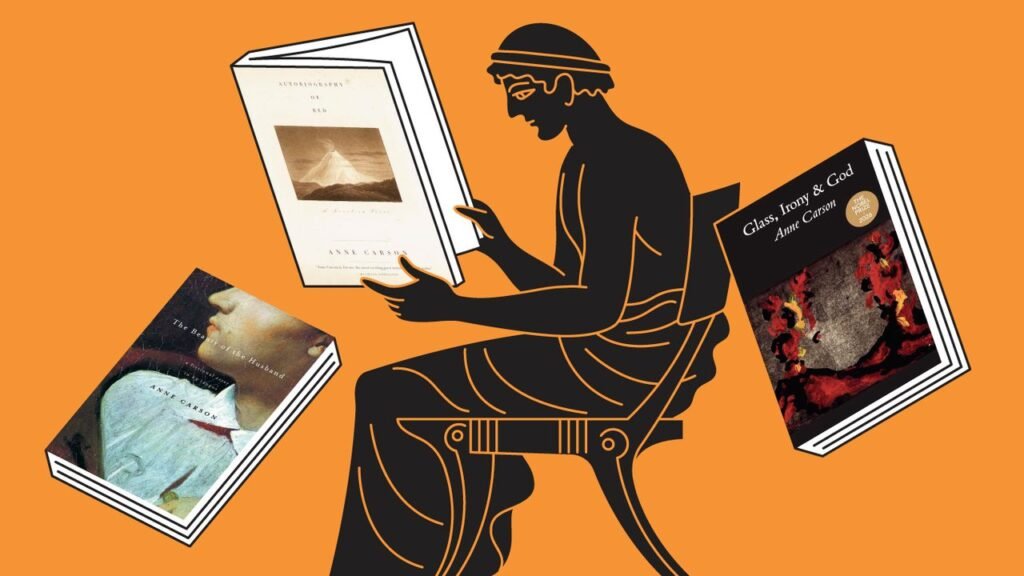
The six items in Carson’s second assortment are clear, sharp, splintered, and luminous. It contains her single most arresting poem, “The Glass Essay,” a cold, desolate account of the top of a love affair, informed by a speaker who believes that she is “turning into Emily Brontë / my lonely life round me like a moor, / my ungainly physique stumping over the mud flats with a glance of transformation / that dies once I come within the kitchen door.” The poem’s anguished meditations on love’s savagery and isolation are designed to attract blood.
“The Fantastic thing about the Husband: A Fictional Essay in 29 Tangos”
“We could sharpen our eyes and circle nearer to the great thing about the husband,” the twenty-fifth part of this livid book-length poem begins. Its swerving, combative model is impressed by the tango, “the forbidden dance”—a stunningly bodily encounter between two individuals who ought to by no means have touched however are actually violently intertwined. Additionally intertwined are historic myths of warring city-states, the uncooked, moody poetry of John Keats, and the fashionable battle between a faithless husband and his spouse, the poem’s raging speaker. The guide was awarded the T. S. Eliot Prize in 2001, making Carson the primary girl ever to win it.
The “Geryoneis,” a poem by the blind Greek poet Stesichoros, exhibits us glimpses of Geryon, a winged purple monster with three heads, who’s brutally killed by Herakles. Carson loosely, haltingly interprets Stesichoros’ verses—“Arrow means kill It parted Geryon’s cranium like a comb”—then tells the story of Geryon and Herakles as a homosexual romance. They first see one another at a bus depot: “There it was a type of moments / that’s the reverse of the blindness. / The world poured backwards and forwards between their eyes.” The cosmic tenderness of their hungry younger love turns into ache and flight, and the poem into “a cry—upcast to that customized, the human customized of mistaken love.”
This brilliantly irregular guide begins with Carson’s translations of fragments by the Greek elegiac poet Mimnermos (“Half moon by way of the pines at daybreak / sharp as a woman’s ribcage”) and ends with “The Anthropology of Water,” my favourite of Carson’s essays. A girl on the pilgrimage highway of Santiago de Compostela meets a person whom she calls “my Cid” and who turns into her lover. Within the rain, they stroll and speak from Saint-Jean-Pied-de-Port to Finisterre, for somewhat greater than a month. “There is no such thing as a query I covet that dialog,” the lady thinks. “There is no such thing as a query I’m somebody ravenous. There is no such thing as a query I’m making this journey to seek out out what that urge for food is.” We learn to seek out out if her “tawdry, staggering, irresistible” want can ever be sated, or if it is a lonely journey with no finish.