Afro-Brazilian Spiritual Communities Face Mounting Discrimination Amid the Local weather Disaster — World Points
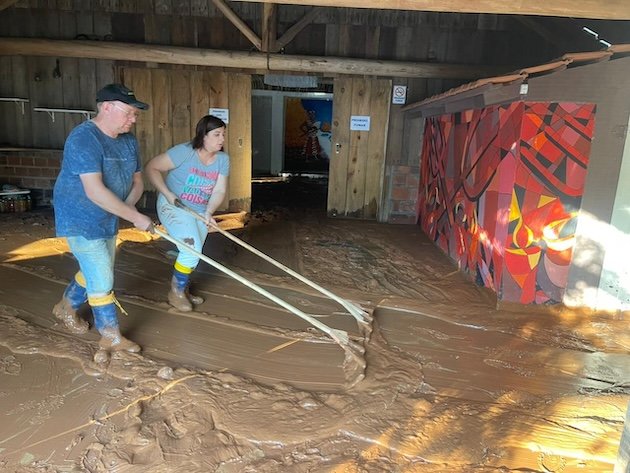
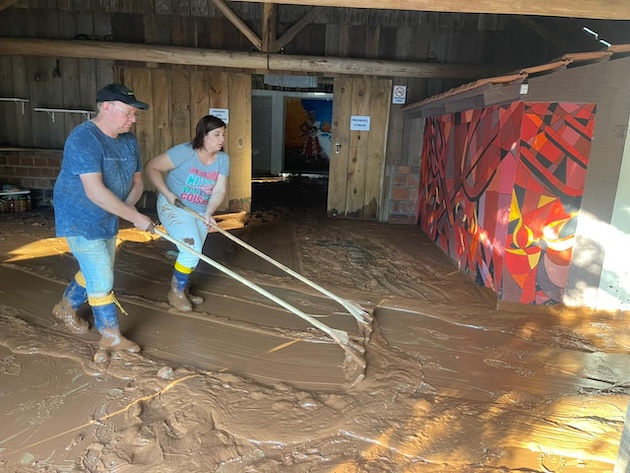
BELÉM, Brazil, October 19 (IPS) – In 2024, as floodwaters approached Lutalo Canti’s dwelling in Porto Alegre, Brazil, he lifted some furnishings off the ground and left in a rush. Excessive rainfall within the nation’s southern area had brought about native rivers to overflow. The flooding would ultimately attain greater than 400 municipalities and influence over 2 million individuals.
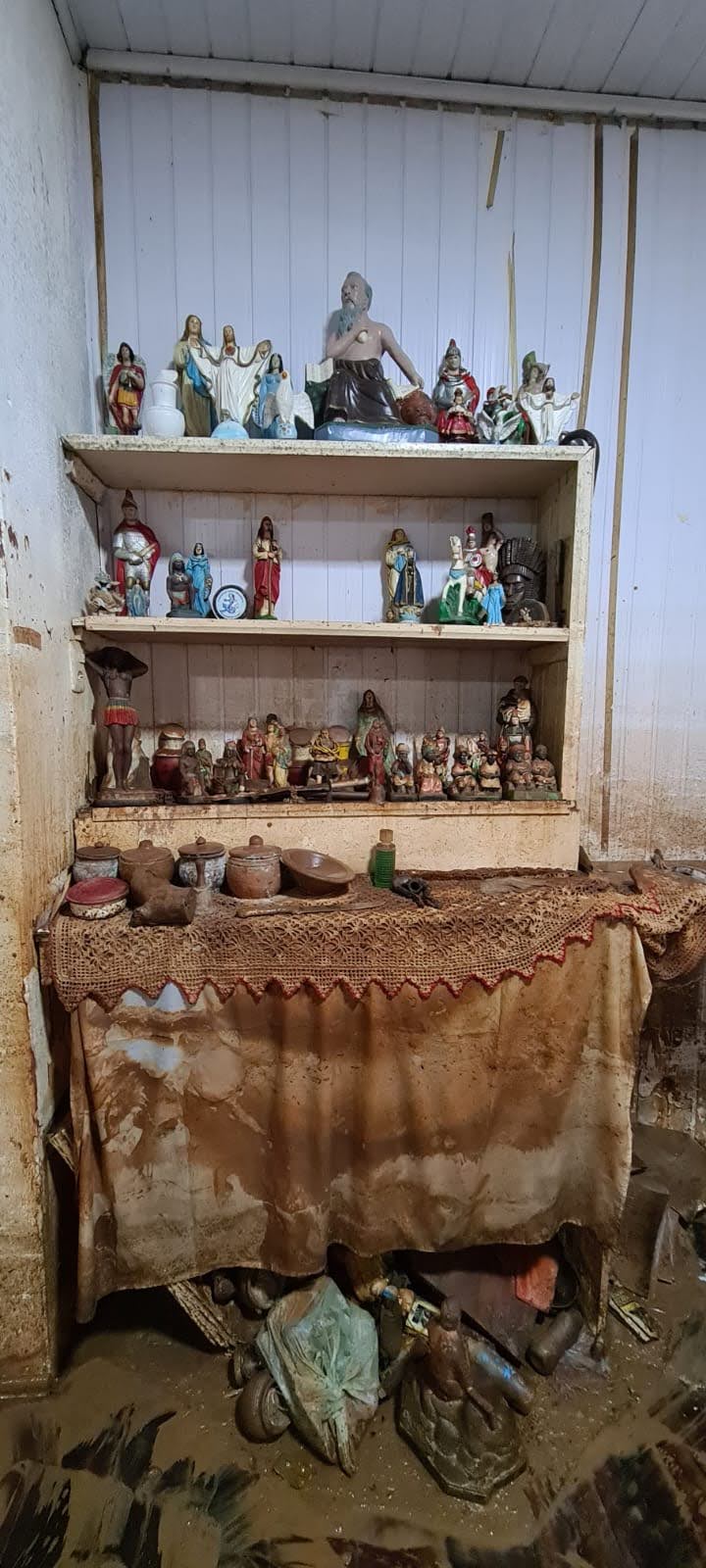
When waters lastly receded, Canti, 61, was shocked to see the injury to his home, which additionally served as a terreiro—a sacred house for the follow of Afro-Brazilian religions.
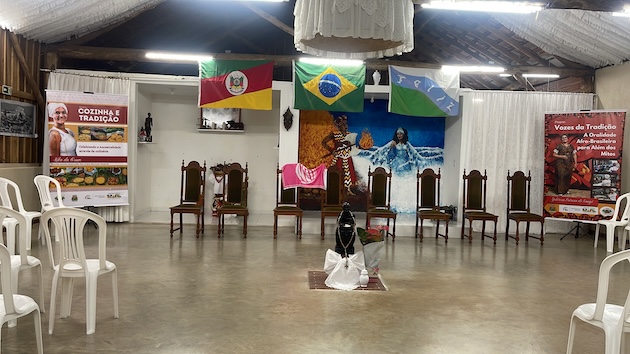
These beliefs, which date again to enslaved Africans and their descendants, have round 1.85 million followers in Brazil, per the newest nationwide census. Terreiros are on the coronary heart of those traditions, serving as areas the place spiritual leaders honor deities and religious entities.
Between water injury, sewage contamination, and mould, he estimates losses to the home round US$15,000 (R$80,000). About half the injury was to his dwelling, and the remainder to non secular objects, together with ceremonial clothes and sacred figures.
Two years later, Canti nonetheless hasn’t recovered all the pieces misplaced and feels largely ignored of donations and different restoration efforts. “We’ve got acquired no assist. Nothing,” he advised IPS. He blames spiritual racism.
A brand new examine reveals that Canti isn’t alone. Because the floods, researchers from the Federal College of Rio Grande do Sul (UFRGS) and the area’s Council of Terreiro Individuals have been surveying the regional terreiros. The findings, that are simply now being revealed, doc widespread reviews of discrimination throughout and after the catastrophe.
“Terreiros skilled extreme spiritual racism,” stated Cláudia Pires, one of many researchers concerned within the examine. “That features difficulties accessing meals and water, lack of entry to their very own areas, in addition to delays or an entire lack of response from public authorities to their wants.”
Instantly after the catastrophe, out of 711 terreiros surveyed, nearly all (94.1%) reported structural injury—with greater than half of these utterly destroyed.
Within the months that adopted, extra in-depth interviews with 241 terreiro leaders indicated an ongoing disaster. Observe-up information reveals that greater than 80% of these leaders reported emotional hurt and compelled displacement.
As they struggled to get better, a lot of them suspended spiritual gatherings for months, whereas 3.5% closed completely. “That was the saddest discovering for us,” stated Tanara Furtado, a co-author of the examine. “It might seem to be a small quantity, however it represents the disappearance of historical past, ancestry, and traditions. For Afro-Brazilian religions, that’s profound.”
Boundaries to Receiving Support
The examine reveals discrimination reviews starting within the early days of the catastrophe.
Whereas many flood victims have been evacuated to shelters, Afro-Brazilian spiritual practitioners typically didn’t really feel welcome in these areas. “When individuals noticed their guias (sacred necklaces), they have been handled badly,” Furtado stated. “Many ended up staying in associates’ and family members’ houses, typically 25 individuals sharing a home with a single rest room and no working water.”
And whilst donations poured in from throughout Brazil, a number of reported a lot of that help failed to achieve them.
In a phone interview, Pai Valdir de Oxalá, 55, recalled the challenges of accessing fundamental provides. The babalorixá, or Afro-Brazilian spiritual chief, is the president of the Council of Terreiro Peoples of the State of Rio Grande do Sul (CPTERGS).
After his personal terreiro was flooded within the municipality of Guaíba, he organized for an out-of-state group to ship meals, water, and different provides to round 400 followers of close by terreiros.
“When the truck arrived, they observed our faith and refused to depart the donations until I stated a Christian prayer,” he recalled. “This goes in opposition to my beliefs and is an aggressive type of spiritual racism. However I had no selection. Individuals didn’t have what to eat, drink, or put on. So I prayed.”
Iyá Paty de Xangô, often known as Mãe Patrícia, says she continued to face discrimination lengthy after the catastrophe. The floods triggered a landslide that buried her spiritual web site within the municipality of Feliz. The property consists of a number of residences, ritual areas, and a library.
“We submitted greater than 40 official requests to metropolis corridor asking for assist,” she stated. “Though we’re a public-utility establishment, it took them two months to return over with equipment, whereas different non-public properties have been being cleared.”
In 2024, a technical report by Brazil’s Federal Public Defender’s Workplace (DPU) concluded that the native authorities confirmed “resistance to offering emergency help and repairing the injury” at her web site. The doc additionally discovered that public authorities had been “selective in offering help to non secular entities.”
On the time, the municipality of Feliz attributed the delay in help to the size of the catastrophe. In a letter, officers said that they did “not have enough personnel and equipment to reply to all requests instantly.”
Patrícia ultimately turned to the courts. In July 2025, she sued the municipality, the state authorities, and the house owners of a neighboring property, looking for measures to guard her web site from future landslides.
Spiritual Racism in a Altering Local weather
Baba Hexa, a theologian and babalorixá religious chief, argues that the local weather disaster is amplifying vulnerabilities which have lengthy existed in these communities. “That is merely the continuation of a historic course of,” he stated. “Since at the very least the nineteenth century, Afro-Brazilian spiritual traditions have confronted persecution.”
He believes the foundation of this racism lies in Brazilian society’s excessive “Christian-centrism,” which he says has led to intolerance towards different religions. He additionally factors to longstanding anti-Black racism. “When Christian-centrism and racism converge, they produce this spiritual racism that we’re seeing.”
Hexa says this discrimination now spans throughout many components of society. “We’ve got confronted persecution from the police to the medical institution,” he stated. “Legal guidelines in opposition to quackery and charlatanism have been even created particularly to persecute Afro-Brazilian spiritual traditions.”
The UFRGS examine suggests these experiences stay widespread. Of the 241 spiritual leaders interviewed, 70.8% stated that they had suffered spiritual racism from neighbors, public authorities, police, Evangelicals, Catholics, and others. Of these, 47% stated they skilled it ceaselessly.
Researchers argue that this discrimination has in flip made these communities extra susceptible to local weather disasters. Pires stated many terreiros have been pushed to peripheral areas which might be neglected in metropolis planning. “When it rains, these peripheral areas find yourself being sacrificed,” she stated. “I believe sacrifice is an important phrase right here.”
Tremendous El Niño
As a robust El Niño brings extra excessive climate to southern Brazil, the researchers proceed monitoring terreiros throughout the area. Since August, nearly 100 have reported injury associated to excessive climate.
“That is our new regular,” stated Furtado. “We’ve got terreiros that have been affected by the 2024 floods and are already being affected once more by winds, rains, and floods.”
Within the municipality of Canoas, babalorixá Júlio César Santos, 47, has been watching the climate carefully. In 2024, his terreiro, the place he practices Umbanda amongst different Afro-Brazilian traditions, was utterly submerged. Almost two years later, the house stays unfinished, regardless of greater than US$15,000 (R$80,000) spent on repairs.
“When it rains, I get very nervous,” he stated. “It’s a concern that stays with us.”
Santos has considered leaving his home as a result of danger of future flooding however says he doesn’t have the funds to purchase a brand new dwelling. He was discovered ineligible for a housing help program for flood victims. “It’s not so simple as discovering one other home,” he stated. “I want land and entry to nature to follow my faith.”
He additionally wants the approval of orixás—religious deities—to maneuver his terreiro to a different location. “It’s the orixá who will select,” he stated. “It’s not me, Júlio, who decides.”
IPS UN Bureau Report



© Inter Press Service (20261019095134) — All Rights Reserved. Authentic supply: Inter Press Service