Creating Alternatives within the Maritime Transition for Latin America and the Caribbean — World Points
LONDON, November 26 (IPS) – The COP31 local weather summit in Antalya, Türkiye comes at a decisive second for humanity. We at the moment are grappling with a situation wherein the Paris Settlement purpose of limiting world warming to 1.5 °C won’t be met, which brings the idea of “overshoot” to the fore. The perfect present aspiration is to restrict the extent of that overshoot, peak emissions as quickly as potential, after which return to 1.5 °C.
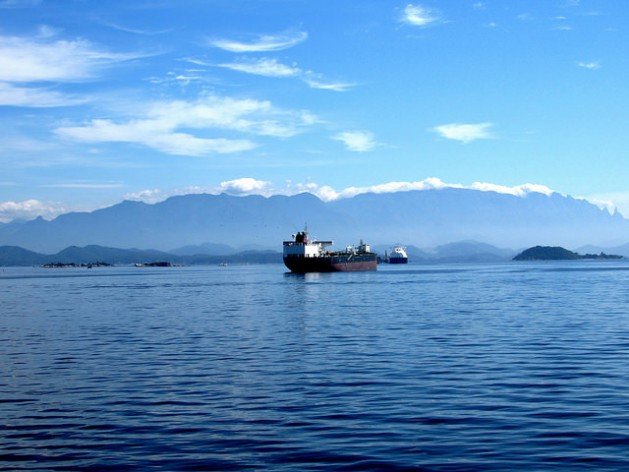
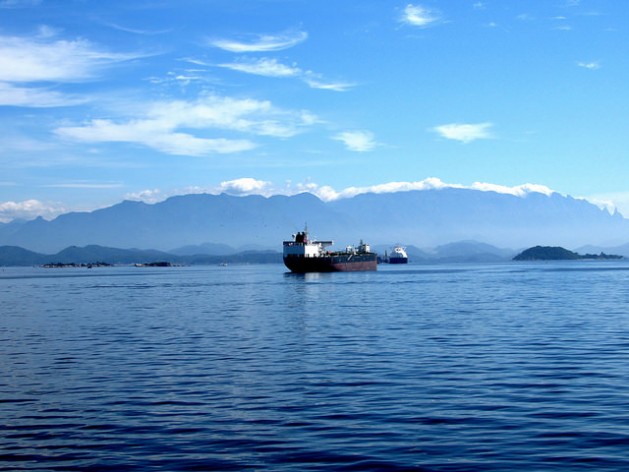
The maritime transport trade contributes 3% of all greenhouse gasoline (GHG) emissions, or roughly 1 billion tons of CO₂, yearly. If the transport trade have been a rustic, it could be the world’s sixth-largest emitter. However we’ve methods to scale back the sector’s impression.
This week, the twenty third Intersessional Working Group on Discount of GHG Emissions from Ships of the UN’s Worldwide Maritime Group (IMO) will meet in London to debate easy methods to decarbonize transport.
On the middle of the negotiations is the IMO’s Web-Zero Framework, whose textual content was authorised in 2025, however whose formal adoption stays pending. The framework combines two devices of extraordinary significance for the maritime sector, with world attain: a worldwide customary to progressively scale back the greenhouse gasoline depth of marine fuels, and a world emissions pricing mechanism.
Greater than 80% of worldwide commerce by quantity is carried by sea. IMO choices may have implications for commerce prices, export competitiveness, port funding choices, power infrastructure, and future gasoline demand.
It’s subsequently important to broaden how international locations put together for these negotiations. Maritime and environmental authorities will proceed to play a central position, however the choices on the desk additionally require the systematic participation of these chargeable for commerce, power, infrastructure, finance, and financial improvement.
Commerce ministries can assess which export sectors are most uncovered to modifications in transport prices. Vitality authorities can decide whether or not their international locations have the circumstances to supply the marine fuels of the long run or of port electrification and electrical vessels. Infrastructure and finance officers can determine the investments wanted for these alternatives to materialize.
The pathway to net-zero emissions generates world advantages, however its prices and alternatives usually are not evenly distributed. Nor do all international locations arrive on the negotiating desk with the identical capability to mannequin impacts, assess technological alternate options, estimate commerce results, or design insurance policies that permit them to seize new financial alternatives. Closing that information hole is an important situation for a simply maritime transition.
Latin America and the Caribbean mustn’t restrict itself to assessing how a lot it would value to adapt to the brand new guidelines. The area has vital potential benefits: extraordinary renewable sources, the capability to supply hydrogen-derived fuels, strategically positioned ports, and an industrial and human expertise base that would participate in new worth chains. The problem can be to evaluate the potential advantages of the transition, and to develop the capacities, infrastructure, and markets wanted to seize them.
Philanthropy has a really related position to play right here. Past supporting analysis, advocacy, and academic efforts, and pre-competitive mission coordination, it might probably assist construct institutional capability in international locations and areas that have to generate their very own technical information and take part with higher weight within the worldwide processes that may outline the principles for the upcoming many years. Philanthropic funding can guarantee not solely extra lively participation from organizations within the many international locations that at present have extra restricted roles, but in addition that any end result reached internationally is really sturdy and that implementation of the transition shouldn’t be confined to developed international locations.
Take the Micronesian Middle for Sustainable Transport, for instance. To vary how local weather funding reaches Pacific Island Nations, they helped create the Pacific Blue Delivery Partnership, a brand new effort led by the international locations themselves to coordinate efforts to chop emissions from home transport extra equitably.
Proteus | Latin American and Caribbean Middle for Maritime Decarbonization and Competitiveness was launched on 24 November in London. It’s a new regional platform created to strengthen the technical capability of Latin America and the Caribbean within the face of the maritime transition. With delegations from a number of international locations of the area, the Middle offered a primary research centered on Costa Rica, which examines the extent of ambition of various decarbonization pathways, their potential prices, and the financial alternatives every might unlock.
Costa Rica is an particularly illustrative case as round 95% of its electrical energy technology got here from renewable sources in 2023. That power base can develop into a bonus for brand new port electrification alternatives and, doubtlessly, for producing among the marine fuels of the long run.
That is exactly the sort of evaluation Latin America and the Caribbean must multiply: research constructed from throughout the area, with native knowledge, able to translating a world negotiation into concrete public coverage choices on power, commerce, ports, and trade on the nationwide and regional ranges.
For Latin America and the Caribbean, participating within the transition of the spine of worldwide commerce should imply serving to to design new guidelines for the trade, and capturing a justifiable share of the worth they generate.
Tania Miranda is Senior Supervisor for Maritime Delivery at ClimateWorks Basis and Chair of the Advisory Board of Proteus.
© Inter Press Service (20261126133718) — All Rights Reserved. Authentic supply: Inter Press Service