Indian buyers rush to Nvidia, SpaceX, Apple as native buying and selling apps roll out entry
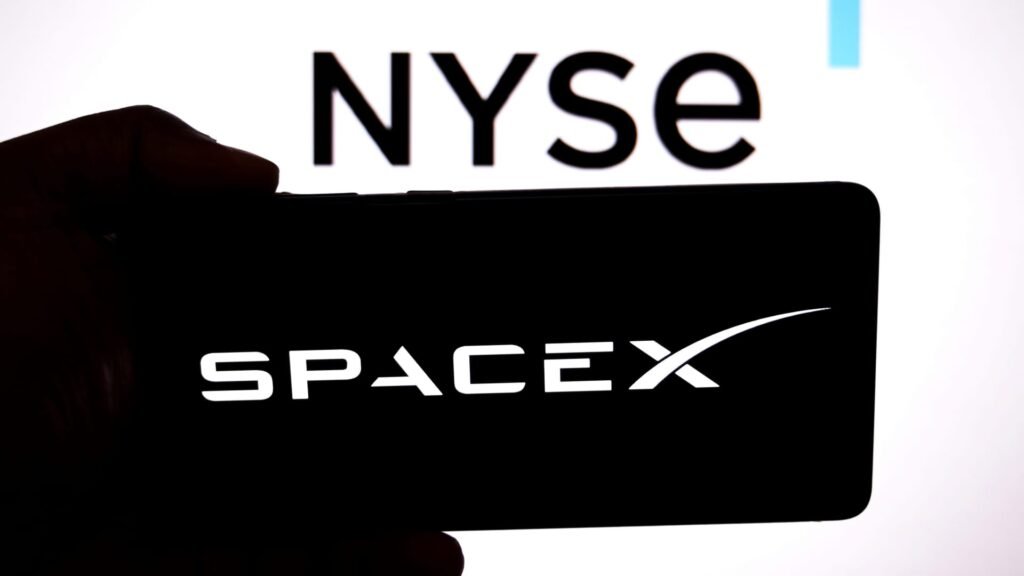
INDIA – 2026/07/22: On this photograph illustration, a Spacex emblem is seen displayed on a smartphone with a NYSE (New York Inventory Change) emblem within the background.
Sopa Pictures | Lightrocket | Getty Pictures
Main Indian on-line funding platforms are unlocking entry to U.S. shares for hundreds of thousands of retail buyers desperate to diversify into world property because the nation’s markets proceed to underperform.
Earlier, entry to U.S. markets and exchange-traded funds was restricted to wealthier Indians, by way of world banks and wealth administration corporations.
Groww, an Indian funding platform that accounts for greater than 29% of the nation’s 46 million energetic buyers throughout inventory brokerages, rolled out the U.S. fairness buying and selling function earlier this month, Harsh Jain, chief working officer and co-founder of the corporate, informed CNBC.
NVIDIA, SpaceX, Apple, Alphabet, Amazon, Micron and Meta are the most well-liked corporations amongst early customers, Jain mentioned, whose agency has supplied entry to greater than 10,000 U.S. shares, exchange-traded funds and fractional share possession.
Zerodha, the second-largest buying and selling platform with a 15% share of energetic purchasers as per NSE knowledge, has additionally began beta testing entry to U.S. shares and plans to launch in a couple of weeks, the corporate informed CNBC.
One other common brokerage with 6.7 million energetic retail purchasers, Angel One, can be reportedly planning to launch U.S. inventory buying and selling on its platform.
There’s a “large curiosity” amongst Indians to put money into U.S. shares, particularly in tech corporations, Nitin Jain, chief government and director at Kotak Mahindra Asset Administration Singapore, informed CNBC. He added that “retail buyers like no matter goes up,” pointing to the frenzy amongst Indian buyers for investing in crypto a couple of years again.
U.S. shares in demand
“There has at all times been latent demand in India for investing in world corporations,” Somnath Mukherjee, vp of company improvement at Zerodha, informed CNBC.
He mentioned that the underperformance of the Indian inventory market over the previous few years and the dearth of native synthetic intelligence champions is driving the demand for U.S choices. The depreciation of the Indian rupee towards the greenback can be pushing buyers “to maintain part of their portfolio in one other forex,” Mukherjee mentioned.
India’s benchmark inventory index, the Nifty 50, has dropped almost 13% because the begin of the 12 months whereas the S&P 500 has gained over 12%. International buyers are fleeing the nation’s markets, with a report $32.5 billion in outflows in direct equities since January, as per knowledge from Indian depository NSDL, pressuring the inventory market.
With the absence of any main AI firm and comparatively costly valuations, buyers have picked markets resembling South Korea and Taiwan over India, specialists mentioned.
In August, resident Indians despatched over $321 million abroad for investing in fairness and debt, up 111% from a 12 months in the past, based on the Indian central financial institution’s knowledge. Within the monetary 12 months ended March 2026, outward remittances for investments in fairness and debt stood at $2.6 billion.
Whereas the retail outflows are a small fraction of India’s forex reserves, the concern is that they rise precisely when the rupee is weak, and US markets look robust, and thereby “amplify stress on the worst second,” Tanvi Kanchan, affiliate director, head of worldwide enterprise and technique, Anand Rathi Shares & Inventory Brokers mentioned.
Funding now accounts for about 11.7% of whole outward remittances, up from 5.8% a 12 months in the past, so Indians are shifting from spending overseas to investing overseas, Kanchan mentioned.
The exit of overseas buyers and rising power payments as a result of Iran struggle have already hit the Indian forex, warranting the central financial institution to step in. Kotak’s Jain cautioned that as participation will increase, the Indian regulator may have “second ideas” round permitting retail entry to U.S. markets.